Waterfront Basics In Plantation Key: Docks, Seawalls, Storms
May 14, 2026
May 14, 2026
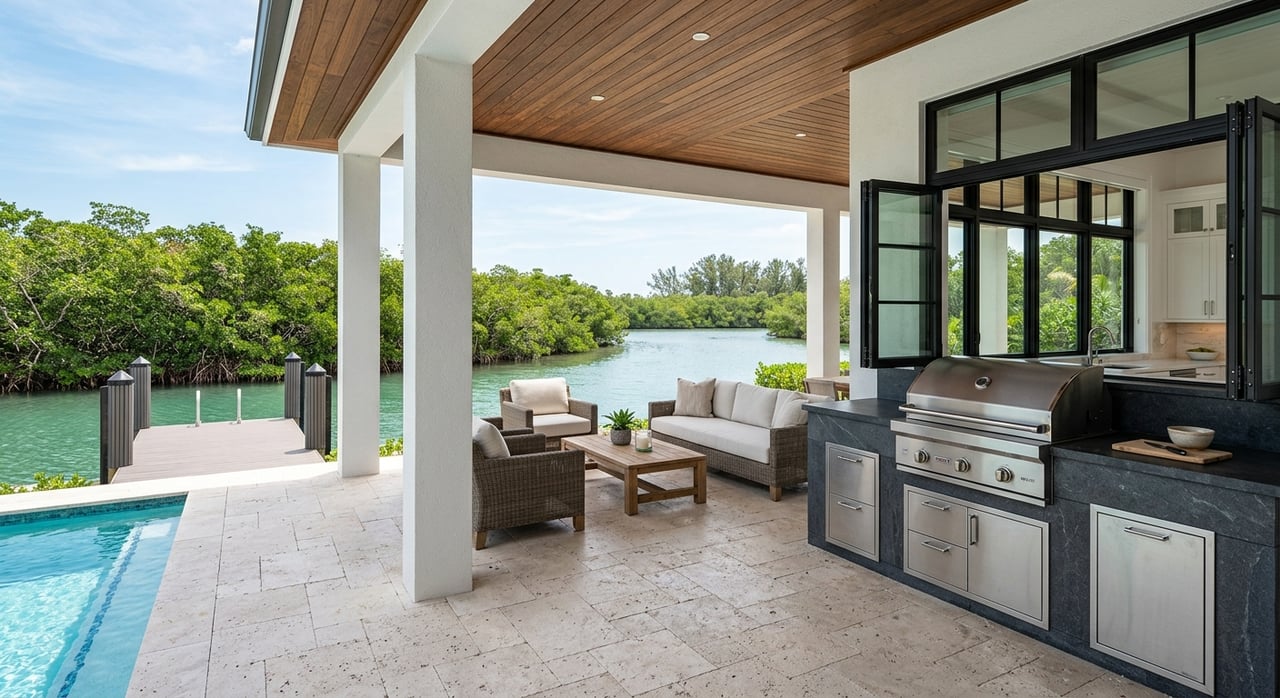
Waterfront homes in Plantation Key can look effortless from the dock, but buying one takes more than admiring the view. You are not just evaluating a house here. You are also evaluating the shoreline, the dock, the seawall, the floodplain, and how all of those pieces work together. If you want to avoid expensive surprises and buy with confidence, it helps to know what to verify before you write an offer. Let’s dive in.
In Plantation Key, waterfront ownership comes with more moving parts than a typical home purchase. Monroe County manages boating infrastructure and public-water access through its Marine Resources Office, and the surrounding waters are regulated by county code along with state and federal laws.
Flooding is also a constant part of the local conversation. Monroe County states that all of the county is in a coastal floodplain, with recurring flood risk tied to low elevations and exposure to tropical storms and hurricanes. That makes due diligence especially important before you commit to a property.
Another big factor is the type of shoreline. A home on open water is treated differently from a home on a manmade canal, channel, or basin, especially when it comes to seawall work and future repairs.
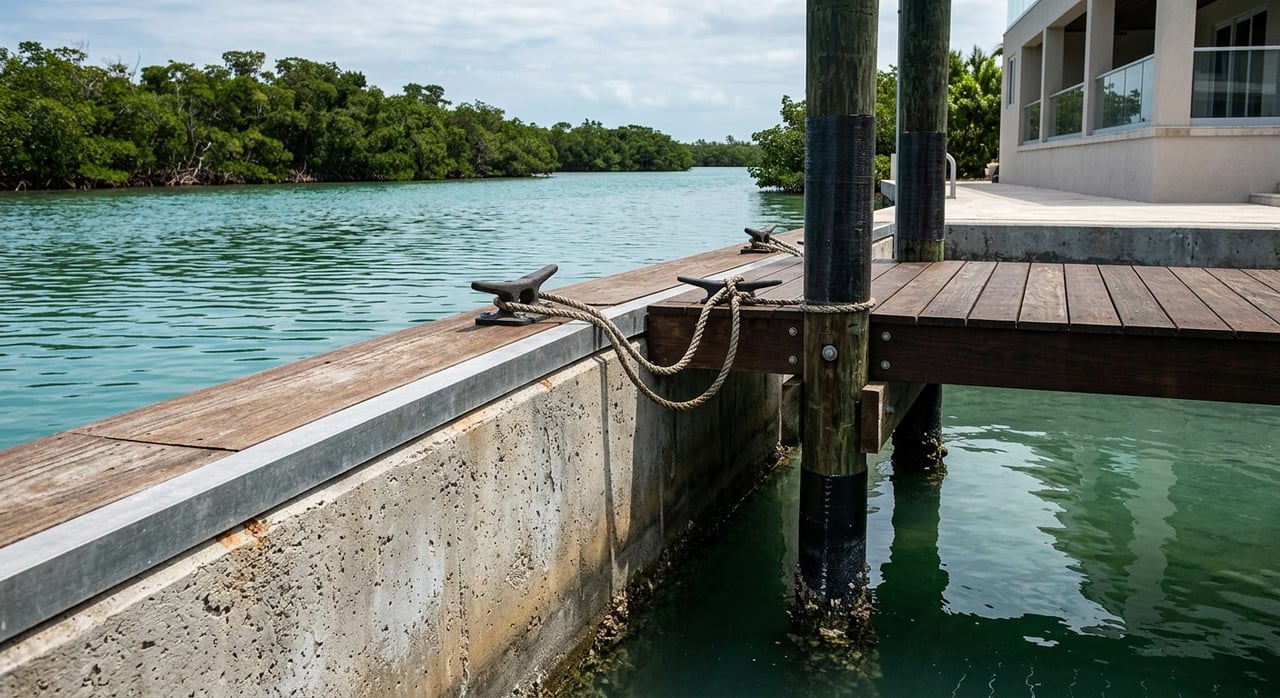
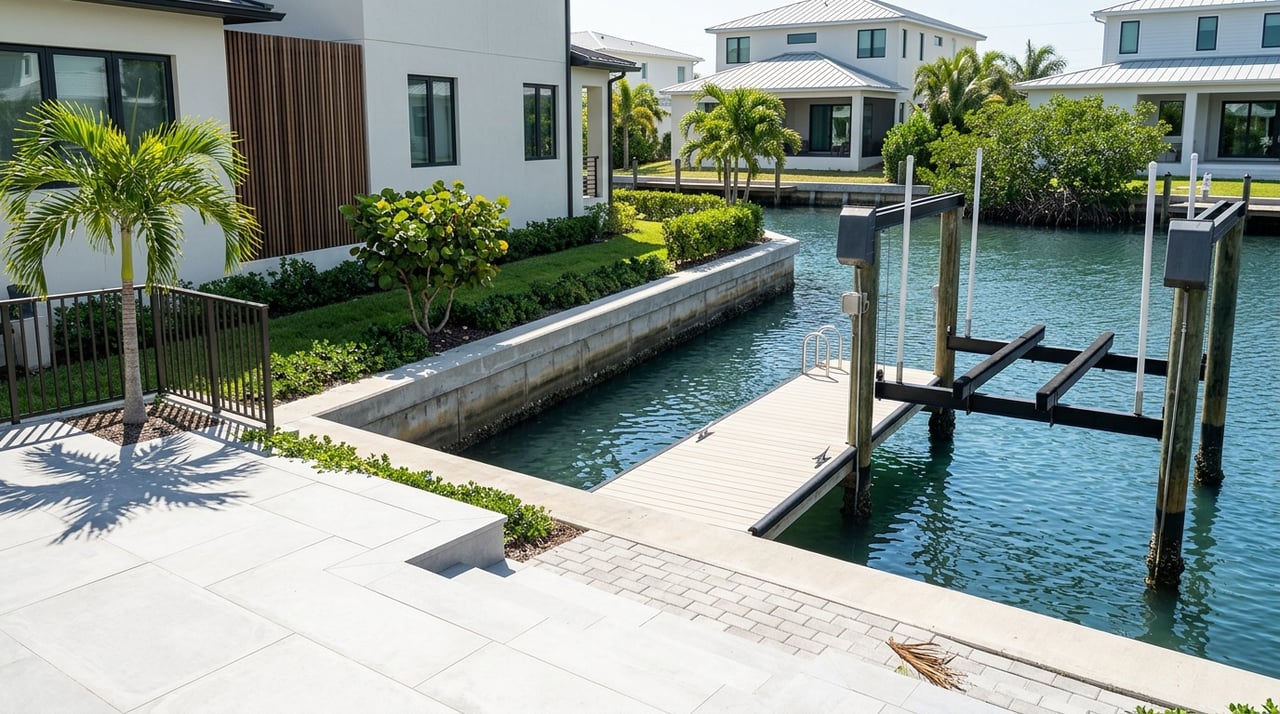
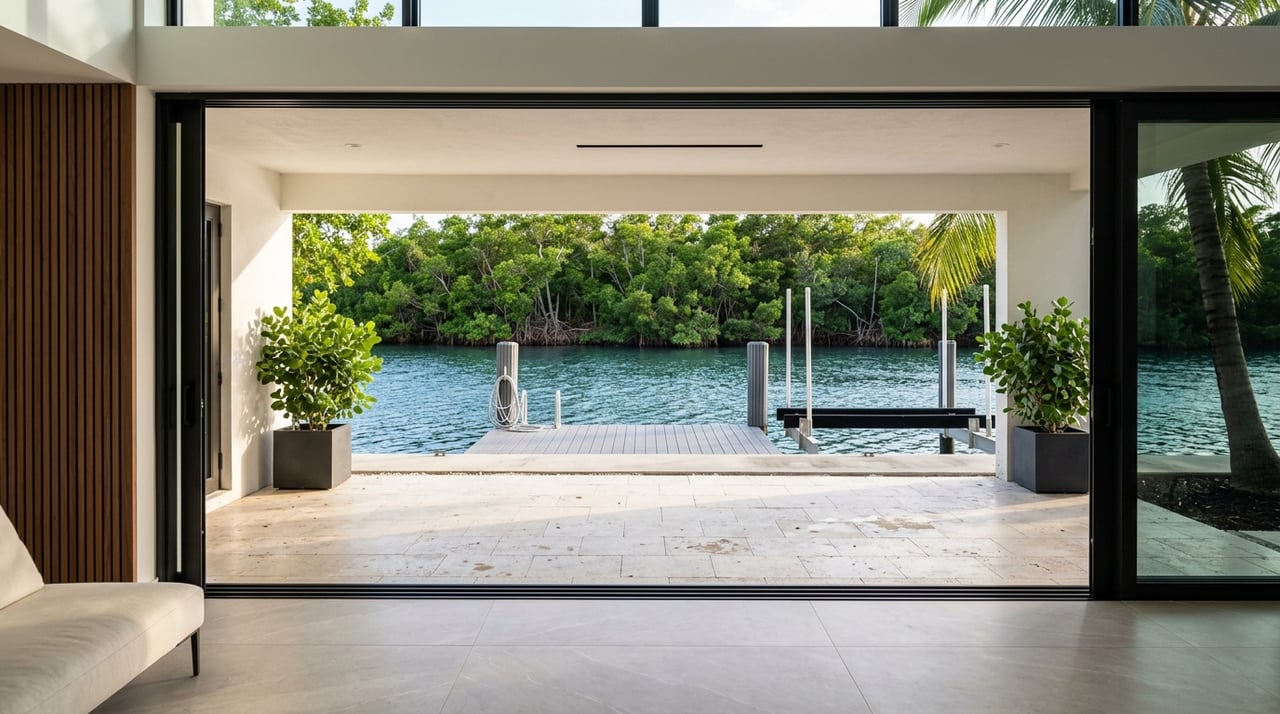
A dock can be a major value point, but only if it actually works for the boat you plan to keep. In Plantation Key, that means looking beyond the listing description and asking how usable the dock is in real-world conditions.
Monroe County requires state and federal permits before county approval for docking facilities, and it sets minimum standards for water depth and access. For many docks that do not terminate over seagrass or hardbottom, the terminal end needs at least four feet of water depth at mean low water and continuous access to open water.
If you have a specific boat in mind, your first question should be whether the dock has enough water at mean low water for that vessel. A dock may look fine at high tide but still be a poor fit for your boat.
You should also confirm whether access to open water is straightforward. A narrow canal, shallow cut, or constrained route can affect how practical the dock really is.
Permit history matters more than many buyers realize. Monroe County permit records for residential dock and boat-lift work often include lift capacity and any related electrical scope, so those records can help you understand what was added and whether it was handled properly.
Before you write an offer, ask for records tied to the dock, the lift, and any electrical work. That review can help you spot whether a feature was permitted and whether the setup matches your intended use.
Submerged conditions can affect both use and future permitting. Where seagrass or hardbottom is present, Monroe County may require stricter documentation, including benthic and bathymetric surveys in some cases.
That means a dock is not just a structure above the water. What lies below the surface can shape future repairs, modifications, and approval timelines.
If mangroves are part of the property, do not assume they can be trimmed freely. Florida DEP says certain mangrove trimming or alteration may be exempt within the footprint of some docking structures, and there may also be exemptions for mangroves growing into a seawall during maintenance or repair.
Even so, DEP advises property owners to contact the district office with photos before starting work. For buyers, that means mangroves should be treated as part of your due diligence, not as a simple cleanup item after closing.
A seawall is both a structural feature and a permitting issue. In Plantation Key, what you can repair, replace, or build depends heavily on the location and condition of the shoreline.
Monroe County says bulkheads, seawalls, or riprap may be allowed for erosion control, but the rules are tighter for hardened vertical structures. Vertical seawalls or bulkheads are allowed only to stabilize severely eroding shorelines on manmade canals, channels, or basins, and only when native vegetation or softer stabilization methods are not feasible.
This is one of the most important distinctions for buyers. Monroe County code states that new seawalls, bulkheads, or other hardened vertical structures are not permitted on open water.
Existing deteriorated seawalls and bulkheads may be repaired or replaced, but the work is generally expected to stay close to the existing footprint. So if you are looking at an older waterfront home, the shoreline type can directly affect your future options and costs.
A seawall can appear acceptable from above and still raise important questions. Before making an offer, ask for the wall’s age, permit history, and the date of the last repair or replacement.
You should also confirm whether the seawall sits on open water, a canal, a channel, or a basin. That simple question can tell you a lot about what repairs may be possible later.
Not every waterfront edge will have a traditional seawall. If a property has a more natural shoreline, Florida DEP describes shoreline stabilization as a site-specific choice that can help protect both the property and water quality.
For buyers, the key point is that shoreline protection is not one-size-fits-all. The right solution depends on the site and the regulations tied to it.
Flood risk is central to underwriting and ownership in Plantation Key. Monroe County states that all of Monroe County is in a floodplain, and the county places base flood elevations in a broad range of 6 to 17 feet above mean sea level.
That means flood review should happen early, not after you are already emotionally committed to the home. Insurance, elevation, and enclosure issues can all affect your total cost of ownership.
An elevation certificate can be an important document in Monroe County because the county uses it to rate flood risk. It can help you understand how the home sits relative to base flood elevation and may shape insurance conversations.
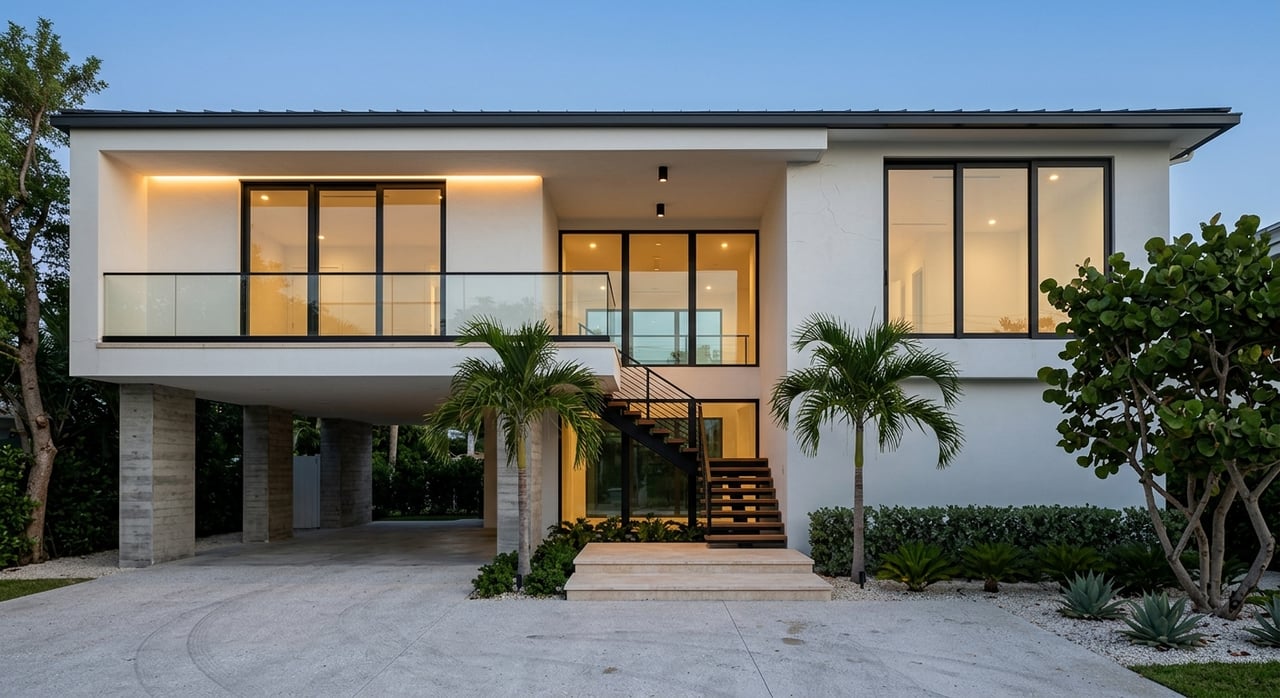
Monroe County also notes that structures built after December 31, 1974 must have the lowest floor elevated to or above base flood elevation. Finished or habitable spaces below that level can create major complications and expenses.
Monroe County warns that habitable space below base flood elevation can create significant unforeseen costs for an owner or buyer. The county also states that finished enclosures below BFE may not be permitted construction.
That is why buyers should review the home carefully and ask direct questions about lower-level spaces. What looks like bonus square footage may come with risk if it was not built or permitted correctly.
Monroe County says preliminary coastal flood maps are not final or adopted. They may suggest future elevation changes for construction, but they remain subject to change until FEMA issues a final determination and Monroe County adopts the maps.
For buyers, the takeaway is simple. Review both the current effective flood information and any preliminary map changes before relying on your budget, insurance estimate, or renovation plans.
Homeowners insurance and flood insurance are separate issues in Monroe County. The county states that homeowners insurance does not cover flood damage, which is why insurance review should happen before closing, not after.
There is also some good news for eligible policyholders. Monroe County participates in the National Flood Insurance Program and the Community Rating System, which has produced 25 percent discounts for residential NFIP plans in unincorporated Monroe County.
Even with that benefit, every property should be evaluated individually. A waterfront buyer should discuss both flood insurance and homeowners insurance with an insurer before the deal is final.
If you are buying waterfront in Plantation Key, storm planning comes with the property. Hurricane season runs from June 1 through November 30, so it makes sense to factor storm readiness into your purchase decision.
Monroe County Emergency Management advises residents to make a plan before a storm threatens, review insurance, photograph property, secure loose items, and know where important shutoffs are located. The county also stresses that if a mandatory evacuation is ordered, you should leave.
For boat owners, prep goes beyond the house. Monroe County advises owners to know how they will secure a vessel before a storm, consider hauling it out or moving it onshore if possible, keep vessel insurance current, and never ride out a storm on the boat.
If the property’s value to you depends on boating access, this is worth discussing before you buy. A dock and lift are only part of the picture. Your storm plan matters too.
When you are considering a Plantation Key waterfront home, a few focused questions can reveal a lot:
These questions can help you separate a beautiful waterfront setting from a well-vetted waterfront purchase.
In the Florida Keys, the details behind the view matter. Dock depth, seawall rules, floodplain conditions, and storm planning can all affect whether a home fits your goals now and in the future.
That is why many buyers benefit from working with a team that understands the local waterfront process, not just the listing photos. If you are exploring Plantation Key waterfront homes and want guidance grounded in real local experience, connect with Sally Stribling Luxury Group for thoughtful, high-touch support.
Stay up to date on the latest real estate trends.
We pride ourselves in providing personalized solutions that bring our clients closer to their dream properties and enhance their long-term wealth. Contact us today to find out how we can be of assistance to you!