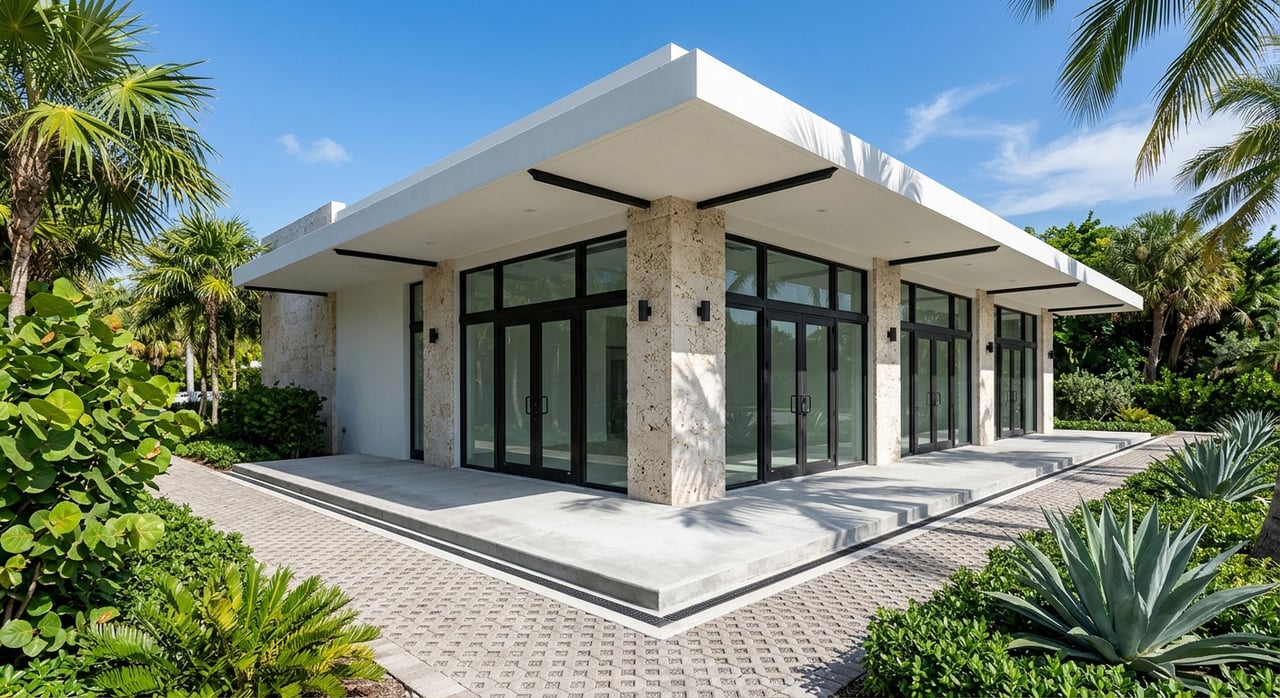
Islamorada Commercial Real Estate Opportunities Overview
April 2, 2026
April 2, 2026
If you are exploring commercial real estate in Islamorada, the opportunity is real, but so is the complexity. This is not a broad suburban business market where you can judge a property by frontage alone. In Islamorada, tourism demand, zoning limits, U.S. 1 access, environmental rules, and permit timing all shape what a site can actually become. This overview will help you understand where demand is coming from, which property types stand out, and what to review before you buy. Let’s dive in.
Islamorada benefits from a tourism-driven economy with clear demand tied to visitors, recreation, dining, and waterfront activity. According to Monroe County’s 2025-26 marketing plan, the Florida Keys welcomed 4.7 million domestic visitors in 2024, and the county’s 2023 travel-impact study estimated $313.7 million in visitor spending in Islamorada. Those figures help explain why investor interest often centers on visitor-serving assets rather than office-heavy or commuter-based projects.
Tourism patterns also matter when you are evaluating future use. County and tourism sources describe Islamorada as a destination shaped by sportfishing, eco-tourism, dining, and nature-based experiences. The same county research shows food service spending in Islamorada was one of the fastest-growing categories since 2019, which supports continued interest in restaurant, casual dining, and convenience-oriented commercial uses tied to visitors. You can review those trends in the Monroe County marketing plan and the 2023 economic impact study.
Hospitality remains one of Islamorada’s most established commercial categories. The current meeting planner guide highlights major lodging properties such as Amara Cay Resort, Cheeca Lodge & Spa, Islander Resort, and Three Waters Resort & Marina, which reflects the market’s continued focus on resort and event-oriented stays.
For you as a buyer, that matters because existing market activity helps show where demand is already proven. In Islamorada, lodging is not a fringe use. It is part of the core commercial identity of the market.
Islamorada is also closely tied to boating, fishing, and marine access. The official tourism directory includes operations such as Whale Harbor Marina and Bud N Mary’s Fishing Marina, which combine charter activity, dockage, fuel, tackle-oriented services, and guest support functions.
That supports demand for marina-adjacent commercial assets and other water-dependent businesses. If you are considering a waterfront or near-water parcel, the use case may be strongest when it aligns with fishing, boating, guest services, or marine recreation.
Not every opportunity in Islamorada is resort-focused. The Village describes Neighborhood Commercial as a compact district for local-serving retail and office uses, while Highway Commercial is intended for businesses along U.S. 1, especially auto-dependent retail, services, and building trades. Those distinctions come directly from a current Village zoning communication.
For buyers, this means the strongest non-hospitality opportunities often involve highly practical uses with direct corridor visibility and easy customer access. Small retail, service businesses, and local convenience uses may fit well, but the right district matters.
Mixed-use potential is a major part of the Islamorada story. The Village’s planning framework directs commercial uses into Mixed Use areas and Village Activity Centers, and one council communication notes that Mixed Use is the only future land use category in which commercial uses are permitted. The same document also noted that the Neighborhood Commercial district had about 36 parcels villagewide, with 5 vacant, which suggests a very limited supply of small commercial-zoned land.
That limited inventory can make redevelopment more attractive than ground-up expansion. It also means parcel-level due diligence is critical because the opportunity may be less about raw land and more about improving, repositioning, or combining existing commercial property.
Islamorada’s zoning structure is one of the first things to understand before you move too far into a deal. Current districts include Village Center, Tourist Commercial, Highway Commercial, Neighborhood Commercial, Commercial Fishing, Marine Use, and Industrial. The Village also states that commercial zoning is generally established where commercial uses already exist, which reinforces how constrained the market can be.
In practical terms, zoning in Islamorada does more than label a parcel. It influences whether your intended use fits the property at all, how much site work may be required, and what supporting features like parking, circulation, landscaping, and buffers may need to be provided. You can see from Village council records and zoning materials that approvals often involve hotel units, resort expansions, restaurants, bars, convenience stores, fuel sales, and marina or commercial-fishing-related uses.
That pattern is useful because it shows where the market tends to operate in the real world. Many opportunities in Islamorada are tied to hospitality, recreation, waterfront business, or mixed-use redevelopment rather than generic strip-center investment alone.
In Islamorada, U.S. Highway 1 is the dominant transportation corridor. The Village notes that the roadway system centers on U.S. 1, with connector and local streets feeding traffic toward it, while county transit materials describe Overseas Highway as the only land-based link to the mainland for the Keys. You can also see from the Village’s infrastructure overview that the local network is relatively small, with 169 named streets, 39.31 miles of paved roads and rights-of-way, roughly 34 miles of paved bike lanes, and about 10.8 miles of pedestrian and bicycle pathways.
That makes corridor positioning especially important for many commercial uses. Good frontage can add visibility, but visibility alone does not guarantee smooth access or operational ease.
Monroe County’s 2023 U.S. 1 travel-time study reported an overall corridor speed of 44.2 mph, down from 45.5 mph in 2021. It also found 2023 AADT of 23,751 at Upper Matecumbe and stated that the Upper Matecumbe, Windley, and Plantation segments had no reserve capacity. Those findings are outlined in the 2023 travel-time study.
For you, that means site access deserves close review. Driveway design, turning movements, queuing, parking layout, and safe entry and exit can have a direct effect on usability and redevelopment potential.
Islamorada is located within the Florida Keys Area of Critical State Concern, and the Village says that designation reflects environmental sensitivity, development pressure, water-quality protection, habitat protection, and hurricane evacuation concerns. In other words, environmental review is not a side issue during acquisition or redevelopment. It is part of the core feasibility picture.
The Village’s habitat resources page notes that shoreline areas include mangroves, seagrass beds, hard-bottom habitat, and coral reef resources. The Village also points to wastewater, stormwater, and low-elevation infrastructure issues, including vulnerability to sea-level rise and nuisance flooding.
If you are evaluating redevelopment, these conditions can affect site design, preservation obligations, utility planning, and long-term resilience. A parcel that looks straightforward on paper may still face meaningful environmental and infrastructure constraints.
One of the most important local factors is the Village’s Building Permit Allocation System, or BPAS. The Village explains that this is a point-based competitive allocation process for market-rate housing, affordable housing, and nonresidential applications. The system scores applications using factors such as energy conservation, infrastructure availability, and habitat protection, and the Village states that once allocations are exhausted, no building permits are issued for new construction on vacant land. You can review this directly on the BPAS page.
That has real implications for investors and developers. A site may appear to have strong location value, but if allocations, permitting requirements, or site plan obligations create delays, the actual business case can shift quickly.
Site plan review can also require open space, habitat preservation, parking, circulation, setbacks, landscaping, and conservation easements. For commercial property in Islamorada, timing and entitlement are often just as important as price per square foot.
Before you move forward on a commercial opportunity in Islamorada, focus on the items that most often affect feasibility:
The Village’s GIS page specifically warns that parcel and zoning information is constantly being revised and that the Village should be contacted for official current information. That alone is a reminder that desktop research should never replace direct local review.
In a market like Islamorada, the right question is rarely just, “Is this a good location?” The better question is, “Can this parcel support the use, access, design, infrastructure, and approvals needed to make the investment work?” In many cases, that answer depends on how zoning, BPAS, environmental conditions, and transportation access come together on one specific site.
That is why local representation matters. If you are buying, selling, or evaluating a commercial property in the Upper Keys, working with a team that understands waterfront markets, redevelopment complexity, investor goals, and commercial positioning can help you avoid expensive surprises and identify the opportunities that truly fit your strategy.
If you want experienced, local insight on Islamorada commercial property, connect with Sally Stribling Luxury Group. Their boutique, high-touch approach, Upper Keys market knowledge, commercial listing experience, and investor-focused guidance can help you evaluate opportunities with greater clarity.
Stay up to date on the latest real estate trends.
We pride ourselves in providing personalized solutions that bring our clients closer to their dream properties and enhance their long-term wealth. Contact us today to find out how we can be of assistance to you!