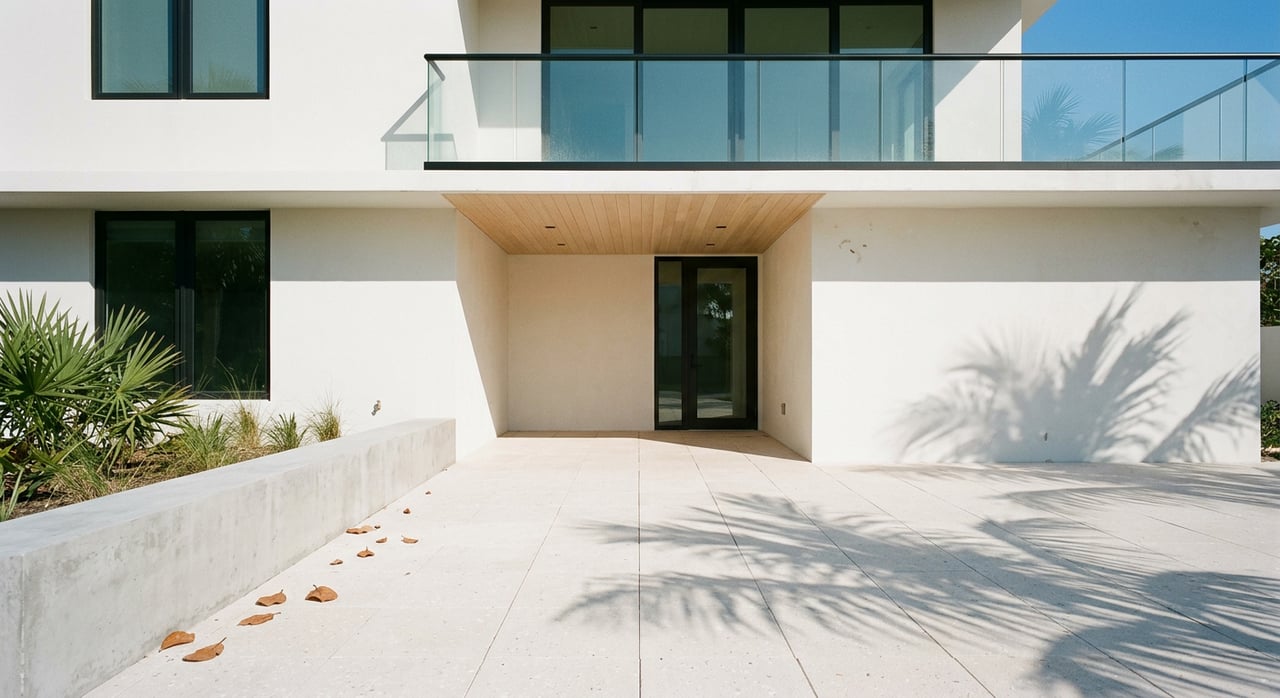
Plantation Key Condos Versus Homes For Second Owners
March 5, 2026
March 5, 2026
Wondering whether a condo or a single-family home fits your second-home goals in Plantation Key? You are not alone. Most second owners weigh maintenance, dock access, rental potential, taxes, and insurance long before they fall in love with a view. This guide gives you a clear, local comparison so you can align lifestyle with cost and compliance. Let’s dive in.
Plantation Key, part of the Village of Islamorada, draws seasonal residents, boaters, and year-round locals who value easy access to the water and a relaxed, small-island pace. If you want quick dock access, municipal marina options, and proximity to parks and recreation, you will find it here. Your best fit comes down to how hands-on you want to be and whether renting the property occasionally is part of your plan.
In a condominium, the association typically manages the exterior structure, common elements, amenities, and the master insurance policy. You pay monthly assessments that fund operations, maintenance, reserves, and insurance. Florida’s Condominium Act outlines these duties, assessments, and insurance obligations, so ask for the documents that show how the community is managed under the law. Review the governing framework in the Florida Condominium Act to understand what the association must maintain and how assessments work: Florida Statutes, Chapter 718.
What to request for a condo during due diligence:
With a fee-simple home, you control the property and cover all exterior upkeep, utilities, and insurance. If the home sits in an HOA, actual responsibilities depend on the recorded declaration. Some HOAs cover only common roads and landscaping, while others maintain more. Always review the HOA’s CC&Rs for specifics. For HOA governance basics, refer to Florida Statutes, Chapter 720.
Budgeting reminders for homes:
Keys properties typically need two policies: windstorm/hurricane and flood. Many owners in Monroe County insure wind through Citizens, the state’s insurer of last resort, and premiums can be a significant annual cost driver. Review Monroe County’s insurance context and Citizens’ role here: Monroe County wind insurance guidance.
Condo note: Master insurance policies often carry sizable windstorm deductibles. After a major storm, associations may levy special assessments to cover deductibles or repairs. Confirm the master policy limits and any recent assessment history under Chapter 718.
Florida’s homestead exemption and Save-Our-Homes caps apply only to a primary residence. Second homes generally do not qualify, so plan for a different tax dynamic than your primary home. For residency and exemption questions, consult the Monroe County Property Appraiser FAQs.
Short-term rental taxes: If you rent for six months or less, Monroe County requires you to register, collect, and remit the 5 percent Tourist Development Tax (TDT) on gross rental receipts, along with applicable state and local sales taxes. Monthly filing is required, and some platforms do not remit County TDT for you. See the Monroe County Tax Collector’s TDT guide.
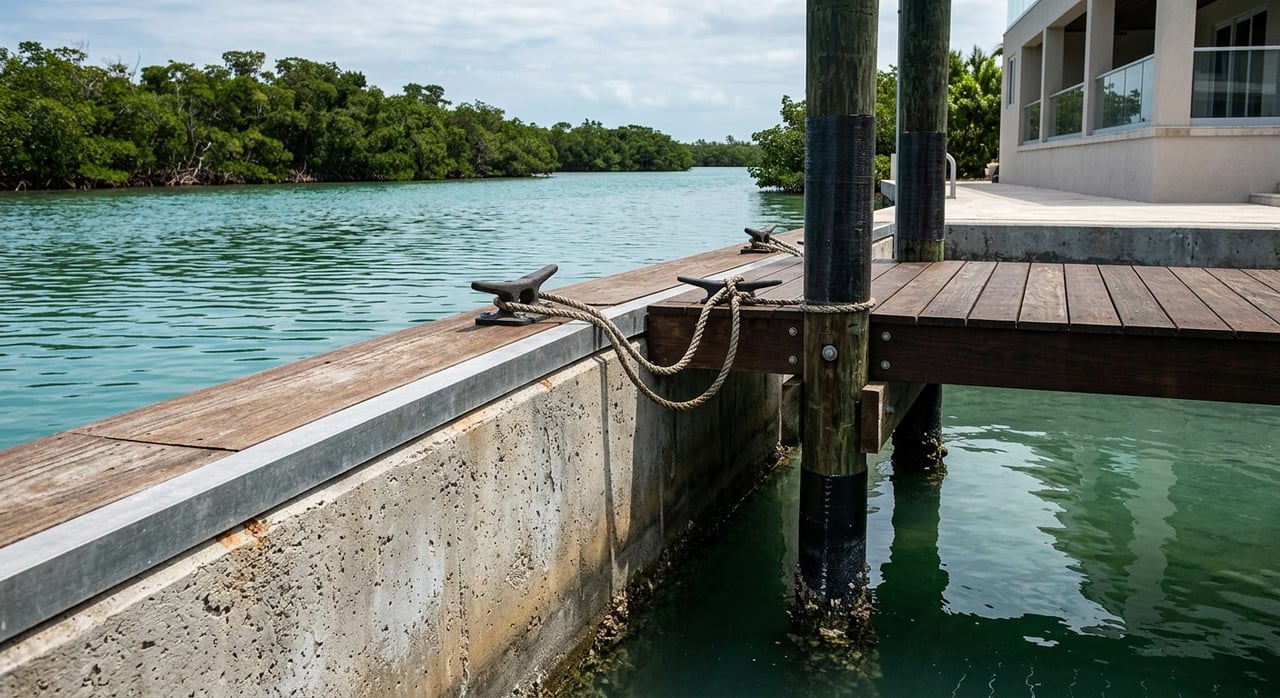
Not every property includes a private slip. The Village-operated Plantation Yacht Harbor at Founders Park offers transient and longer-term slips, fuel, pump-out, and a public boat ramp. This can be a practical solution if you want dependable access without the cost or complexity of maintaining a private dock. Review slip counts, depths, and published rates on the Plantation Yacht Harbor Marina page.
Some condos and subdivisions offer private or community dockage. Whether a slip is deeded, assigned, or first-come-first-served is a recorded document question. Verify the deed, plat, and condominium documents. Confirm mean low water depth and any waiting lists. Ask for any prior permits or as-built drawings for existing docks or lifts.
New docks, lifts, or seawalls often require Village permits, Florida DEP Environmental Resource Permits, and sometimes U.S. Army Corps approvals. Environmental constraints, seagrass protection, depth requirements, and dock-length limits can add time and cost. An example DEP case record for Plantation Key shows how design details and environmental reviews are evaluated: Florida DEP case record example.
Practical tip: Make any dock-related approvals or confirmation of rights a condition of your purchase if boating is central to your lifestyle.
Islamorada requires an annual vacation rental license, published at a fee of 1,325 dollars, with specific documentation and a life-safety inspection before issuance. The Village also sets assessed-value eligibility thresholds that can change over time. Always confirm current requirements on the Village’s Vacation Rental License & Annual Registration page.
A license quota and non-transferability policies make Islamorada a tightly regulated rental market. Licenses generally do not transfer on sale, and the Village’s finite cap can limit availability at any given time. Verify the property’s current license status, assessed value, and zoning with Planning & Development before you count on rental income.
Association rules matter just as much. Many condos and HOAs restrict short stays or prohibit them outright. Minimum stays, occupancy, and parking rules vary by community. Florida statutes give associations authority over rentals and assessments, so review the documents in full: Florida Statutes, Chapter 718 and Chapter 720.
A condo can streamline ownership with exterior maintenance and amenity care handled by the association. This can be ideal if you plan to visit for a few months, prefer predictable costs, and value on-site amenities. Review reserves and special-assessment history carefully.
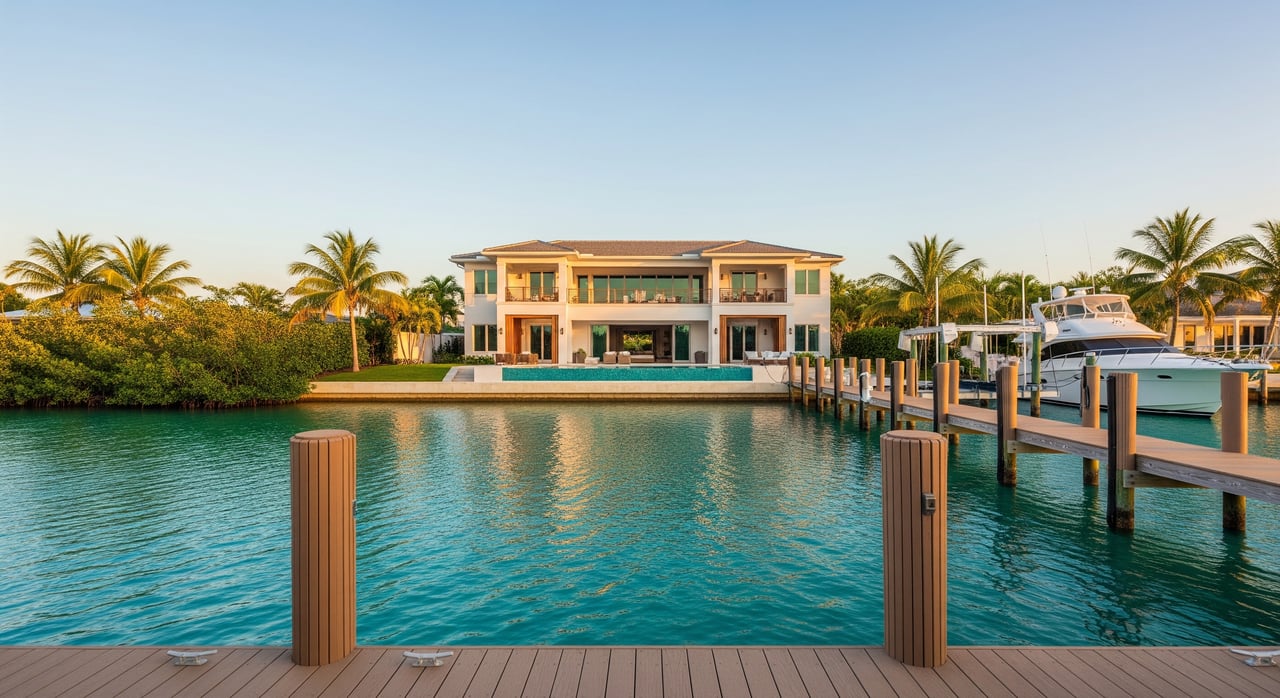
A single-family home with a private dock or lift offers the most control if the parcel has suitable depth and permitted improvements. If that is not available or practical, consider a home or condo near Founders Park and rely on the municipal marina for dependable access while you evaluate long-term slip options.
Either property type can work, but compliance is key. Confirm Village license eligibility, the current license count, and association rules. Budget all fixed costs, including wind and flood insurance, HOA dues, property management, utilities, and taxes. Start with conservative occupancy and seasonal assumptions.
Use this punch list to move from “great idea” to a confident purchase:
Whether you choose a lock-and-leave condo or a private home with a lift and generous dock, the right choice should balance lifestyle with real costs and local rules. If you want help matching your boating needs, rental goals, and long-term plans to the right address on Plantation Key, we are here to guide the process from first tour to smooth closing. Connect with the Sally Stribling Luxury Group to start a tailored search.
Stay up to date on the latest real estate trends.
We pride ourselves in providing personalized solutions that bring our clients closer to their dream properties and enhance their long-term wealth. Contact us today to find out how we can be of assistance to you!