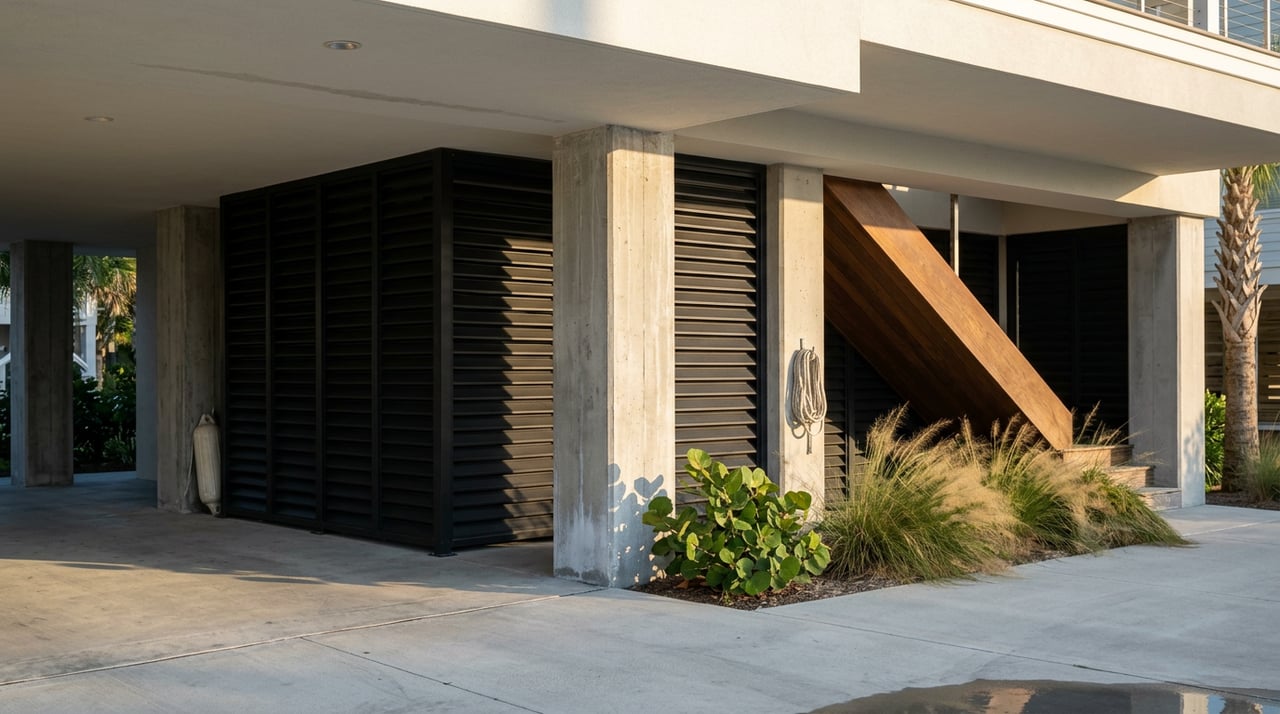
Key Largo's New Storage Rule Made Headlines. The Real Change Is What Disappeared From Your Closing Table.
September 10, 2026
September 10, 2026
"Unnecessary chaos in our industry" is how Key Largo title agent Marlen Weeks described Monroe County's downstairs enclosure ordinance to commissioners back in 2023. She wasn't complaining about how big a garage under a stilt home could be. She was complaining about what happened at the closing table, when a county inspection requirement nobody in the industry had been warned about started holding up sales.
Three years later, the county fixed the thing everyone's talking about and, almost as an afterthought, fixed the thing that was actually causing the trouble.
On February 4, 2026, Monroe County's code amendments took effect eliminating the longstanding 299-square-foot cap on enclosed storage space below elevated homes in unincorporated Monroe County, along with the requirement for an inspection at the time of sale. The county's framing, understandably, leaned on the storage angle. Growth Management Director Emily Schemper called it a step forward for flexibility. But if you're selling or buying a stilt home in Key Largo this year, the storage cap was never your problem. The inspection was.
Here's the split, in plain terms:
| Before Feb. 4, 2026 | After Feb. 4, 2026 | |
|---|---|---|
| Enclosed storage size | Capped at 299 square feet in unincorporated Monroe County | No size cap, provided the space stays storage, parking, or access only |
| Inspection at time of sale | Required under the county's Transfer of Ownership program (in place since 2012) | No longer required |
| Disclosure of unpermitted work | Required under Florida's standard FAR-BAR contract | Still required under Florida's standard FAR-BAR contract |
Notice what's in that bottom row twice. The inspection went away. The obligation to tell a buyer about known unpermitted work did not, because that obligation was never a county rule to begin with. It's baked into the standard Florida real estate contract, the same one used across the state whether a home sits on stilts in the Keys or on a slab in Orlando.
That distinction matters more than it looks like it should.
Think about who the 299-square-foot limit actually touched. It applied to homeowners actively building or expanding a downstairs enclosure, a decision made once, on a construction timeline, with a permit application already in motion. It never touched someone who simply owned a stilt home and wanted to sell it as-is.
The sale inspection touched everyone. Every closing on an elevated home with an enclosed area below flood elevation in unincorporated Monroe County had to clear that inspection first, regardless of whether the seller had ever laid a hand on the space downstairs. That's why the complaints from Weeks and others in 2023 weren't about square footage. Coral Reef Title Company president Carla Bahn pointed out at the time that buyers already had a due diligence period built into every contract, and sellers were already required to disclose unpermitted work, which made a separate county inspection feel redundant on top of a process that was already covered.
The real cost showed up in behavior, not paperwork. By 2023, buyers' agents working in unincorporated Monroe County had reportedly started limiting showings to homes in incorporated areas like Islamorada and Marathon, simply to sidestep the inspection and its unpredictable timeline. That's a market signal a size cap never could have produced on its own. A construction limit shapes what gets built next year. A closing-day inspection with an uncertain turnaround shapes which listings get shown this week.
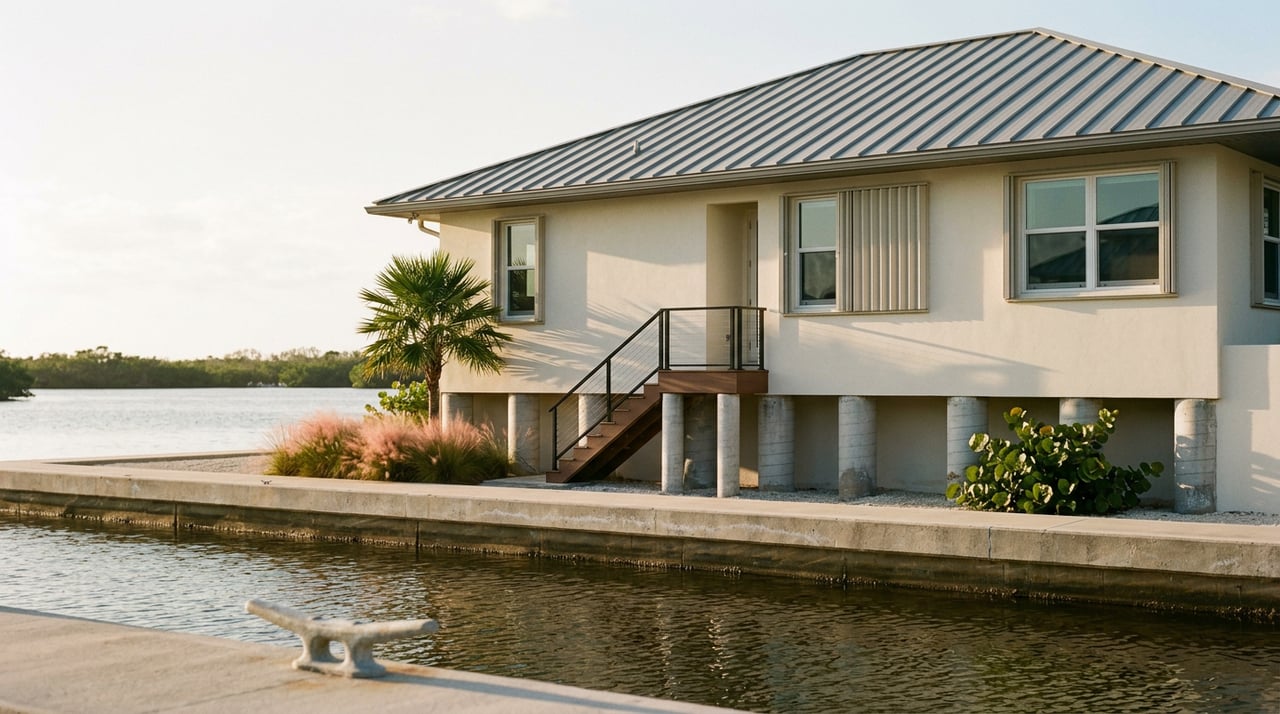
Part of why the inspection became a flashpoint is that it never applied evenly across the island chain. Islamorada and Marathon are incorporated municipalities with their own land development codes, and both allowed homeowners to enclose the full space under a stilt home for storage long before this year's change, with no equivalent sale-day inspection tied to it. Unincorporated Monroe County, which includes Key Largo, was the outlier, bound to both the 299-square-foot limit and the Transfer of Ownership inspection since 2012.
That created a two-tier map inside one small stretch of geography. A buyer comparing a canal-front stilt home in Key Largo against a similar property in Islamorada wasn't just comparing dock access and canal depth. They were unknowingly comparing two different regulatory processes for the same kind of transaction, one of which came with an extra step that could stall a closing.
The February amendment closes that gap. Key Largo now operates closer to how its neighbors already did, which is likely part of why the county pursued FEMA's sign-off in the first place. Monroe County had to document years of consistent enforcement of federal floodplain minimums before FEMA agreed to let the county drop its 2004 remedial plan, the one that had created the cap and the inspection back when the county was trying to avoid being suspended from the National Flood Insurance Program.
Here's where sellers need to pay closer attention rather than less. Tom Wright, a board-certified real estate attorney who helped draft Florida's standard FAR-BAR contract, told commissioners in 2023 that the contract already requires sellers to disclose any known unpermitted or illegal work. That requirement doesn't depend on whether a county inspector ever walked through the space.
What the county inspection offered, in theory, was a second, independent check that happened automatically at the time of sale. That check is gone now. Nobody schedules it, nobody waits on it, and nobody gets a county-stamped answer about whether a downstairs enclosure is compliant before the deal closes. The obligation to know and disclose still sits with the seller. The practical difference is that verifying what's actually down there now depends more on a private inspection and a careful look at permit history, and less on a government office doing that work for you on a schedule you don't control.
That's a trade worth understanding rather than assuming is purely a win. Fewer bureaucratic steps at closing is good news for timelines. It is not the same as fewer things worth checking before you sign a contract.
Does this change apply in Islamorada or Marathon too? No. Both are incorporated municipalities with their own land development codes, and neither was ever subject to the county's 299-square-foot cap or its Transfer of Ownership inspection. This change is specific to unincorporated Monroe County, which is where Key Largo sits.
If my enclosure was built years ago, does the new rule make it legal now? No. The amendment doesn't retroactively approve anything. If space downstairs was built without a permit, or exceeds what's allowed for storage, parking, or access, that fact doesn't change because the inspection requirement went away. What changed is that the county is no longer the one checking for it automatically at the time of sale.
A rule change like this is easy to read as simple good news, and in the sense that closings should move faster, it is. But the version of the story worth knowing before you list or make an offer on a Key Largo stilt home isn't the one about extra storage space. It's the one about who used to catch a problem before closing, and who's responsible for catching it now.
If you're weighing a sale or a purchase on a Key Largo canal or oceanfront property and want a second set of eyes on what's actually documented downstairs, Sally Stribling has spent decades working these closings from the Key Largo side of the table. Let's Connect.
Stay up to date on the latest real estate trends.

We pride ourselves in providing personalized solutions that bring our clients closer to their dream properties and enhance their long-term wealth. Contact us today to find out how we can be of assistance to you!