Understanding HOA And Community Rules In Plantation Key
July 9, 2026
July 9, 2026
If you are buying in Plantation Key, HOA rules are only part of the picture. Many buyers focus on dues and amenities first, then realize later that village code, waterfront restrictions, rental rules, and storage standards can affect how they actually use the property. The good news is that with the right document review and local guidance, you can spot those issues early and buy with more confidence. Let’s dive in.
Plantation Key sits within the Village of Islamorada. The village describes its charter boundaries as including the entire island and notes that the area is in an Area of Critical State Concern with a 24-hour evacuation rule.
For you as a buyer, that means community rules often operate alongside a stricter local code environment. In other words, the HOA or condo association may govern day-to-day community standards, but village regulations can still shape what you can do with the property.
In Florida, homeowners associations and condominium associations are governed under different statutes. That matters because the documents you need to review, the disclosures you should expect, and some buyer protections are not exactly the same.
For an HOA property, the core rules usually come from the recorded declaration or covenants, bylaws, and current association rules. For a condo, the document package is broader and can include financials, a FAQ document, and certain building-condition documents if applicable.
You should not rely on listing language, marketing materials, or verbal comments alone. Florida law points buyers back to the recorded documents and published rules, which are the real source of authority.
That is especially important in Plantation Key, where buyers often care about boating, rentals, exterior changes, and storage. Those lifestyle details are exactly where misunderstandings tend to happen.
In Plantation Key communities, association rules commonly address:
Florida law allows HOAs to adopt reasonable rules for common areas and recreational facilities. It also allows fines or suspension of certain use rights for some violations, but the association must follow the required notice and hearing process.
If you are thinking about shutters, fences, generators, docks, lifts, or other exterior improvements, ask early whether prior approval is required. In Florida HOAs, architectural-review authority must be grounded in the declaration or published standards, and those standards must be applied reasonably and equitably.
That can be a major issue for waterfront and second-home buyers who plan to personalize a property after closing. A home that looks perfect today may still require association approval for future changes.
Rental use is one of the biggest issues to clarify before you buy in Plantation Key. Islamorada’s code says vacation-rental use of single-family and multi-family residential properties is allowed only in certain land-use categories, for rental periods of 28 days or less when other conditions are met, and annual registration is required.
That means local code sets an important baseline. A community may be more restrictive than the village rules, but it generally cannot be less restrictive than the controlling local code.
Before you move forward, ask:
If you are buying a second home or investment property, these answers can shape your budget and long-term strategy. They can also affect whether a property fits your goals at all.
In Plantation Key, storage questions are not just minor housekeeping items. They can directly affect how you use a waterfront or lifestyle property.
Florida law provides some protection for exterior storage that is not visible from the parcel frontage or adjacent parcels or common areas, unless a general law or local ordinance says otherwise. In Islamorada, local ordinances do matter in some situations, so you need to review village rules along with the association documents.
Islamorada’s setback ordinance says accessory storage of boats, boat trailers, camper trailers, or recreational vehicles must be within front, side, or rear yards. It also says those items may not be used as dwelling units and must be screened with native vegetation from the view of adjoining property.
For many buyers, this is one of the most practical due-diligence topics on the list. If you plan to keep a boat, trailer, RV, or similar equipment on-site, confirm both the community rule and the local ordinance before closing.
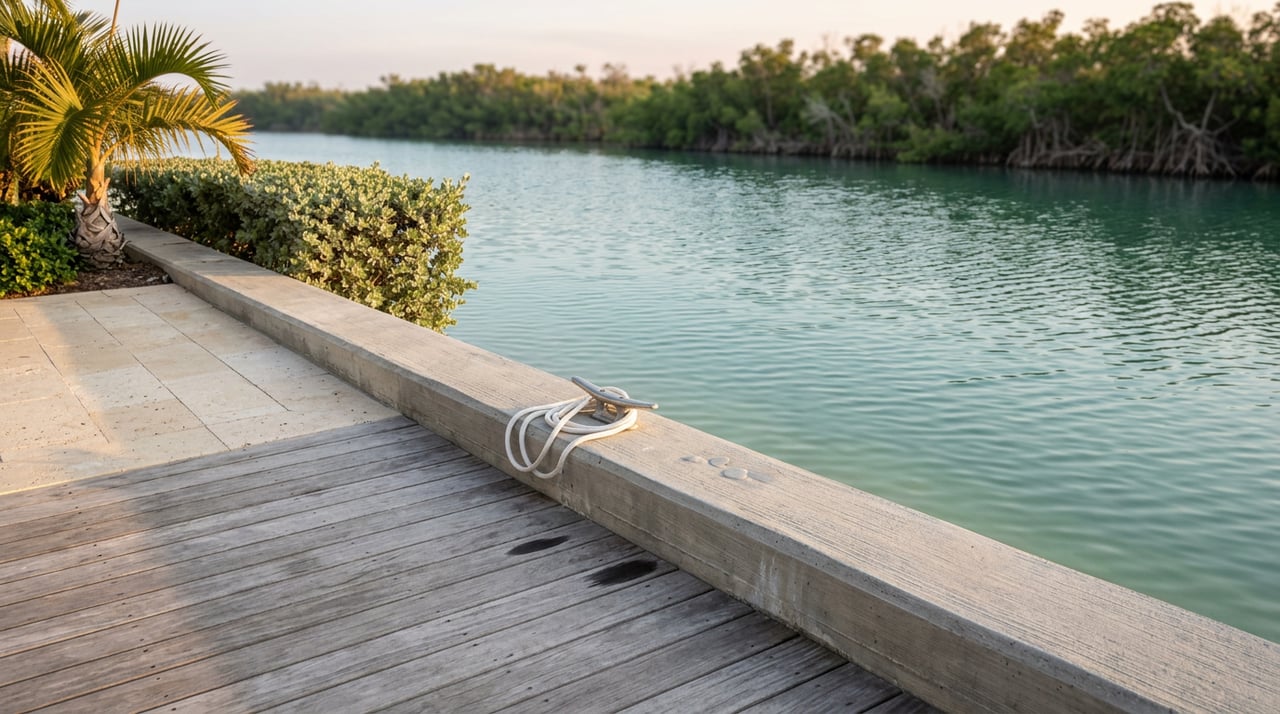
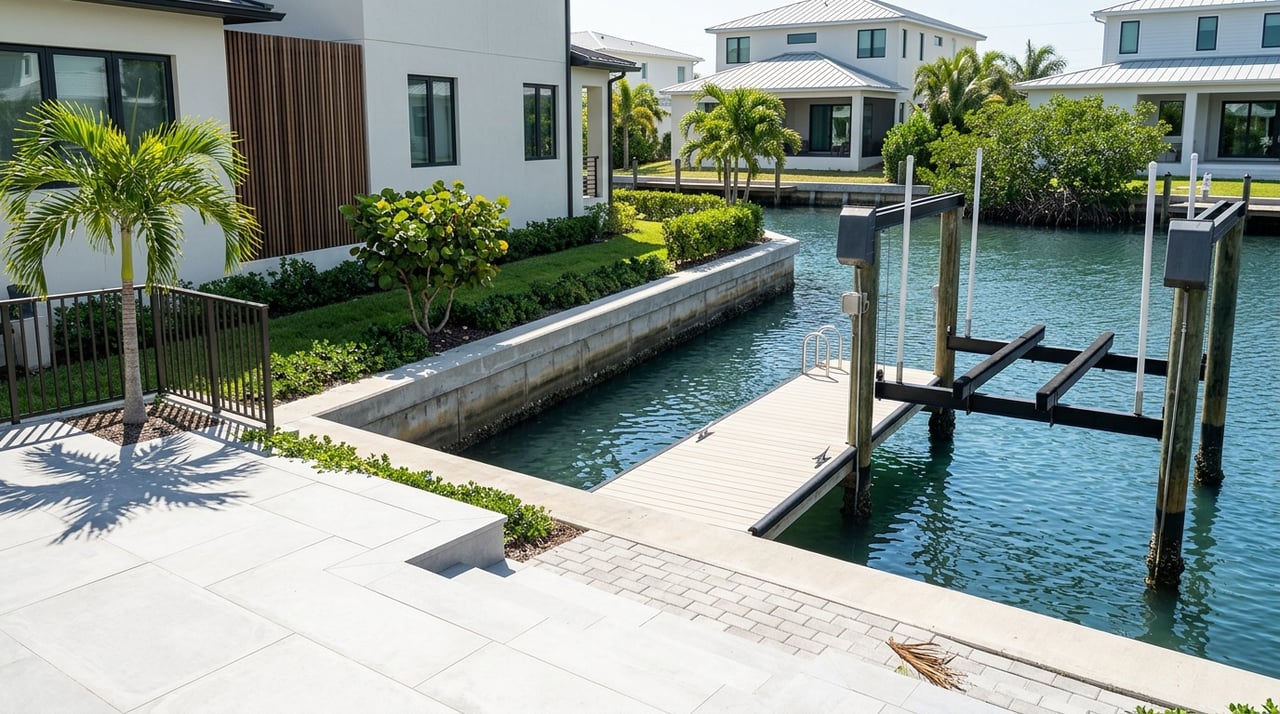
Waterfront property is a major draw in Plantation Key, but it also comes with more regulation. If a property has a dock, lift, davits, ramp, seawall, or other shoreline improvement, you should expect another layer of review.
Islamorada’s shoreline-setback ordinance allows water-dependent accessory structures such as docks, lifts, davits, boat ramps, boat slips, seawalls, riprap, and bulkheads. Even so, those structures still must comply with shoreline setbacks and other design limits.
If you hope to add or modify marine features later, do not assume the existing lot can support your plans. The village rules also say boat ramps should be confined to existing cleared areas where possible, motorized watercraft launching and removal is limited to lawfully existing dock and ramp facilities, and vessels may not dock, moor, or tie up to shoreline vegetation, including mangroves.
For waterfront buyers, these details are not small print. They can affect convenience, cost, and whether a property truly matches your boating lifestyle.
Near-beach and beachfront owners should also pay attention to environmental overlays. Islamorada’s code compliance information notes that turtle nesting season runs from April 15 through October 31, and village rules address artificial lighting and the placement of items such as kayaks and beach furniture.
That means your everyday use of outdoor areas may be influenced by more than the association handbook. In some locations, village rules can matter just as much as HOA or condo rules.
The best way to avoid surprises is to review the full document package early. Waiting until the last minute can leave you with too little time to sort through rental rules, approvals, open violations, or financial concerns.
Request:
The HOA estoppel should confirm dues status, special assessments, transfer fees, open violations, transfer approvals, any right of first refusal, other associations, and insurance contacts.
Request:
The condo estoppel should confirm assessments, transfer fees, open violations, transfer approvals, any right of first refusal, other associations, and insurance contacts.
Florida gives buyers some important disclosure rights, but the timing matters. For HOA resales, a disclosure summary is required before contract execution. If that summary was not delivered before signing, you may cancel within 3 days after receiving it, or before closing, whichever comes first.
For condo resales, the required document package is broader. A buyer is entitled to the key governing and financial documents, and a resale contract can be voided if those documents are not timely delivered.
Both HOA and condo associations must keep official records and make them available to owners within statutory time frames. For HOAs, records generally must be maintained in Florida for at least 7 years and made available within 10 business days after a written request.
This matters because strong records often help you evaluate how the association actually operates, not just how it presents itself. Budgets, minutes, and violation history can reveal patterns that are useful during due diligence.
Because Plantation Key properties can be subject to both association rules and village code, a careful review process is essential. This is especially true if you are buying for boating access, waterfront improvements, part-time use, or rental income.
A practical approach is to review the full document package as early as possible, compare association restrictions against local village requirements, and have a Florida real estate attorney or title professional confirm the final obligations before any contract-voidability deadlines expire.
In a market like Plantation Key, local detail matters. When you understand the rules up front, you can focus on finding the right fit for your lifestyle, your plans, and the way you want to use your property.
If you are comparing neighborhoods, condos, or waterfront homes in Plantation Key, working with a local team that understands both lifestyle priorities and document-level detail can make the process much smoother. To start the conversation, reach out to Sally Stribling Luxury Group.
Stay up to date on the latest real estate trends.


We pride ourselves in providing personalized solutions that bring our clients closer to their dream properties and enhance their long-term wealth. Contact us today to find out how we can be of assistance to you!